

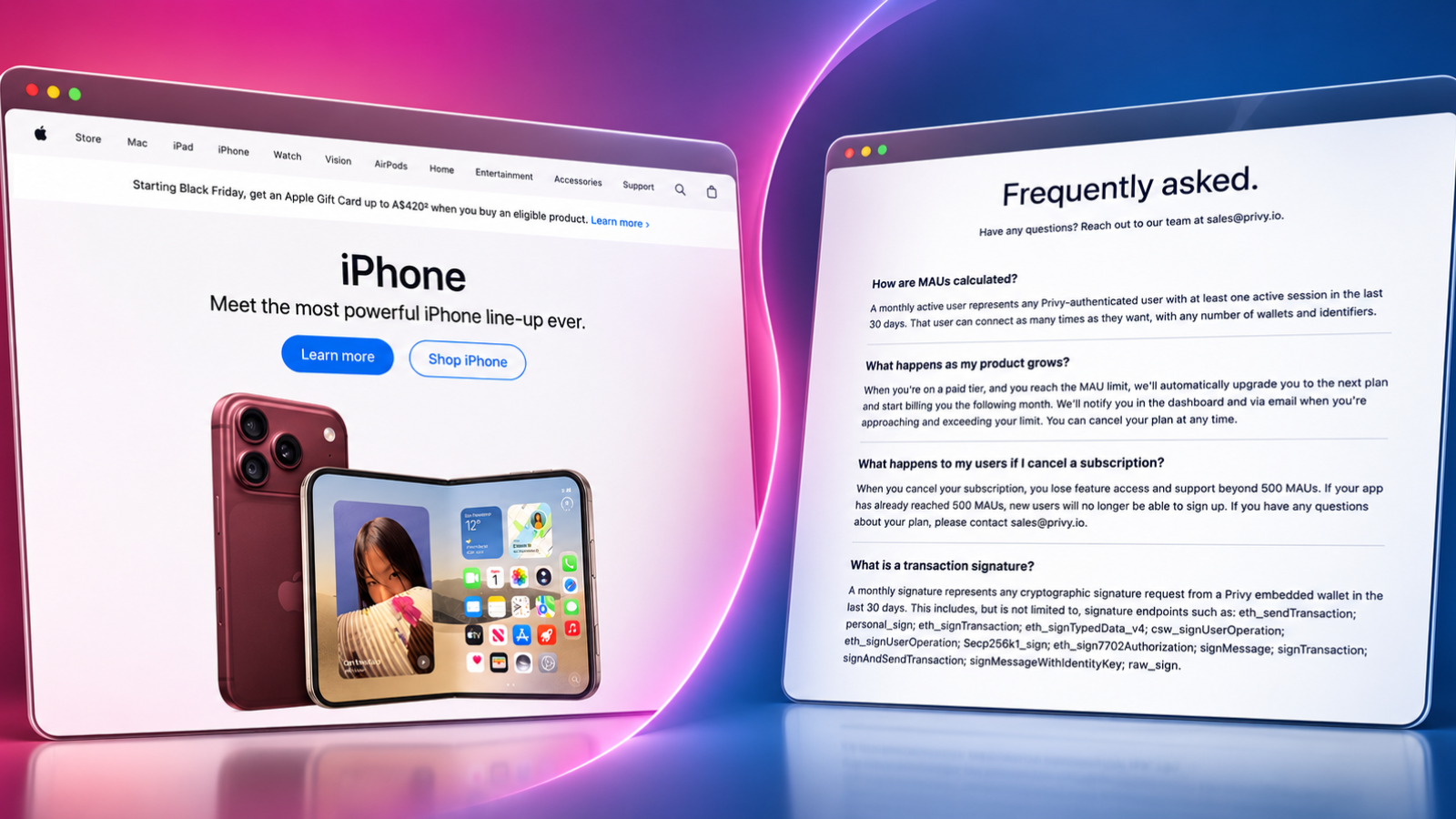
We recently completed a new website build at where one question kept resurfacing throughout the design and development process. Who are we actually building this website for?
Traditionally, the answer would have been straightforward. We build websites for people. We want visitors to feel something when they arrive, connect with the brand, appreciate the design and ultimately take action.
But during this project, the competing priorities of human visitors and artificial intelligence kept raising their heads.
Should we prioritise an engaging visual experience or a more structured presentation of information? Should we invest in creative storytelling or make the content easier for large language models (LLMs) to interpret? Should we build pages that encourage visitors to explore, or pages that allow an AI answer engine to quickly extract the facts it needs?
These are no longer theoretical questions for digital marketers. They are becoming fundamental decisions about how businesses communicate online.
I think the balance needs to shift with the next generation of business websites needing to prioritise facts over feels. That doesn’t mean good design is dead. It means the role of design is changing, and the audience we are designing for is changing even faster.
The numbers are already telling us something
The shift towards AI-powered discovery is happening faster than many businesses realise.
Research by Capgemini in 2025 found that 58% of consumers had replaced traditional search engines with generative AI tools for product or service recommendations, up from 25% in 2023. More recent research reinforces the trend, and the implications for website traffic are significant.
A Pew Research Center study of US Google users found that people clicked a traditional search result in just 8% of visits when an AI-generated summary appeared, compared with 15% when there was no AI summary. Only 1% clicked a link contained in the AI summary itself.
In other words, people are increasingly getting the information they need without visiting the websites that originally supplied it. The longer-term outlook should concern anyone investing heavily in traditional website experiences.
Adobe’s 2026 Digital Trends research found that one in four consumers already used AI-powered platforms as their primary source for information, purchase decisions or recommendations, ahead of brand websites and online reviews. These figures don’t mean websites are disappearing but reinforce the fact that the way people encounter brands is changing fundamentally.
The question you need to ask is whether they are still investing most of their digital budgets in an experience that a growing proportion of prospective customers will never see.
AI doesn’t care how beautiful your website looks
For decades, website design has centred on creating an emotional response. Great photography, striking typography, clever animations, carefully crafted headlines and intuitive navigation all work together to shape how visitors feel about a brand. That approach makes sense when the primary audience is human.
But an AI answer engine doesn’t care, it doesn’t admire your homepage, it doesn’t appreciate a subtle colour palette or feel reassured by an elegant transition between sections.
If key information is difficult to locate, poorly structured or buried beneath layers of creative messaging, the website may be failing an increasingly important audience.
Digital marketing expert Andy Crestodina recently explored this tension in his article, The Case for the Maximalist Homepage (and how to add a Brand Manifest for AI bots). His argument challenges the longstanding preference for minimalist homepages that prioritise visual impact over information density.
Crestodina advocates providing more explicit, factual information about a business, including a detailed brand manifest that helps AI systems understand what the company does and why it deserves consideration. It’s an interesting reversal of conventional design thinking.
For years, designers have been encouraged to simplify, shorten and remove content. Now we need to consider whether that same minimalism is making brands harder for AI systems to understand.
Of course, adding more content doesn’t automatically improve AI recommendations. There is no guaranteed formula for getting an LLM to recommend a particular business. But providing clear, consistent and verifiable information gives search and answer engines better material to work with.
From emotional storytelling to factual authority
I believe we are entering a period where websites will become less focused on design as an end in itself and more focused on functioning as authoritative sources of facts and data. This doesn’t mean abandoning brand storytelling. It means changing how that story is communicated.
A beautifully written statement about being an innovative, customer-focused industry leader might resonate with a human visitor.
For an AI system trying to recommend a supplier, it is far less useful than specific information about services, industries, locations, experience, qualifications, project outcomes and customer results. Businesses should increasingly think of their websites as structured knowledge bases that answer questions with clarity and authority.
That means investing in detailed service descriptions, evidence-backed claims, case studies, clear company information, meaningful page structures and appropriate structured data.
It also means ensuring that important information is accessible in the page content rather than hidden inside images, animations or interfaces that automated systems may struggle to interpret.
This is where Generative Engine Optimisation (GEO) and Answer Engine Optimisation (AEO) become important extensions of traditional SEO. The objective is no longer simply to rank highly enough to earn a click.
It is to ensure that when someone asks an AI assistant for a recommendation, comparison or explanation, your business is accurately understood and has a credible chance of being included in the answer.
The website is becoming the source, not the destination
Perhaps the biggest change is how we measure success.
For much of the internet’s history, marketers have treated website traffic as a central measure of digital performance. More visitors meant more opportunities to engage, persuade and convert.
But what happens when an AI assistant researches ten businesses, compares their capabilities and recommends three without the customer visiting any of their websites?
The brand discovery and initial evaluation have already happened. The website may have played an important role without recording a single visit from that prospective customer.
That challenges the traditional value proposition of web design. Businesses will increasingly need to measure how frequently their brands appear in relevant AI-generated answers, how accurately they are represented and whether that visibility influences enquiries and sales.
READ MORE: CHATGPT NOW LETS BUSINESS CLAIM THEIR AI PROFILE
Traditional analytics will remain important, but traffic alone will become a less complete measure of digital influence. The businesses that adapt will be those that recognise their websites are no longer just destinations for customers.
The future belongs to websites that answer questions
In its 2026 research, Boston Consulting Group found that 43% of surveyed consumers across nine countries had used generative AI to research brands or products or seek recommendations.
This is not a precise forecast of future website traffic, but they provide a compelling indication of where consumer behaviour is heading.
My expectation is that within the next three to five years, a significant proportion of initial brand discovery, product comparisons and supplier shortlisting will happen through AI interfaces rather than directly on company websites.
That is a prediction, not an established outcome. But it is a scenario businesses should be preparing for today.
And it raises another uncomfortable question for marketers. If fewer people visit our websites, how much should we continue investing in creating emotional experiences for those visitors?
There will always be a place for exceptional creative design. Luxury brands, lifestyle businesses and companies selling highly emotional products will continue to benefit from distinctive visual experiences.
Human visitors will also need reassurance, trust and a compelling reason to choose one business over another.
But for many business-to-business and service-based organisations, the commercial value of an additional animation or elaborate visual treatment may increasingly be outweighed by the value of better information architecture, stronger factual content and clearer evidence of expertise.
The challenge is to make sure we are not sacrificing discoverability for creativity.
Facts versus feels. It’s time to redraw the line
The conversations we had during our recent website project are likely to become increasingly common across the digital marketing industry. Designers will continue to advocate for engaging visual experiences. Content strategists and SEO specialists will increasingly push for structured, detailed and machine-readable information.
Both have legitimate arguments.
But I believe the balance has already started shifting towards the latter. We should stop treating AI discoverability as something to consider after a website has been designed and built.
It needs to be part of the initial brief, influencing content strategy, page structure, technical development and ultimately the way a brand presents itself online.
The irony is that the best-performing websites of the future may not be those that create the strongest emotional response when someone lands on their homepage.
They may be the websites that provide the clearest, most comprehensive and most credible answers to questions asked somewhere else entirely. The future of web design isn’t about abandoning creativity. It’s about recognising that creativity alone won’t get your brand discovered.
For agencies and their clients, it’s time to start designing for the audience that increasingly stands between the business and its next customer.
And that audience isn’t always human.